Build process
How Long Does It Take to Build a Pool in Missouri?
Phase by phase: design, permits, excavation, structure, utilities, decking, and start-up — and where the calendar usually slips.
The honest headline
The digging, building, and finishing of a typical inground pool often takes only a few weeks of active work. The journey from "we want a pool" to "we are swimming" usually takes a few months. The gap lives in design decisions, permitting, the builder's backlog, weather, and inspection scheduling. Plan the whole journey, not just the construction window, and you will be much less frustrated.
Phase by phase
1. Design, site visit, and contract
A builder walks the yard, checks access, slopes, utilities, and easements, and turns your wish list into a priced design. Rushed here, expensive later: this is where retaining walls, drainage, and deck scope should be discovered, not during excavation. Allow a few weeks for quotes and decisions, especially in spring when builders are booked out for site visits.
2. Permits and approvals
City or county review, HOA approval where applicable, and utility locates. Timeline varies by jurisdiction and season and is the phase least in anyone's control. See our permits guide for how it works in St. Louis and St. Charles counties. Projects that start permitting in winter sail through this phase; projects that start in April queue behind everyone who had the same idea.
3. Layout and excavation
The pool is painted on the ground, then dug — often in a day or a few days for a straightforward yard. This is also where surprises live: shallow rock in parts of west St. Louis County and the Illinois bluffs, groundwater in low-lying areas, and unmarked lines can all pause the job. A good contract explains how excavation surprises are priced before anyone is standing in a hole arguing about it.
4. Structure
Where the pool types diverge most:
- Fiberglass: the shell is delivered and set, typically in a day, then plumbed and backfilled as it fills. Fastest structure phase by far.
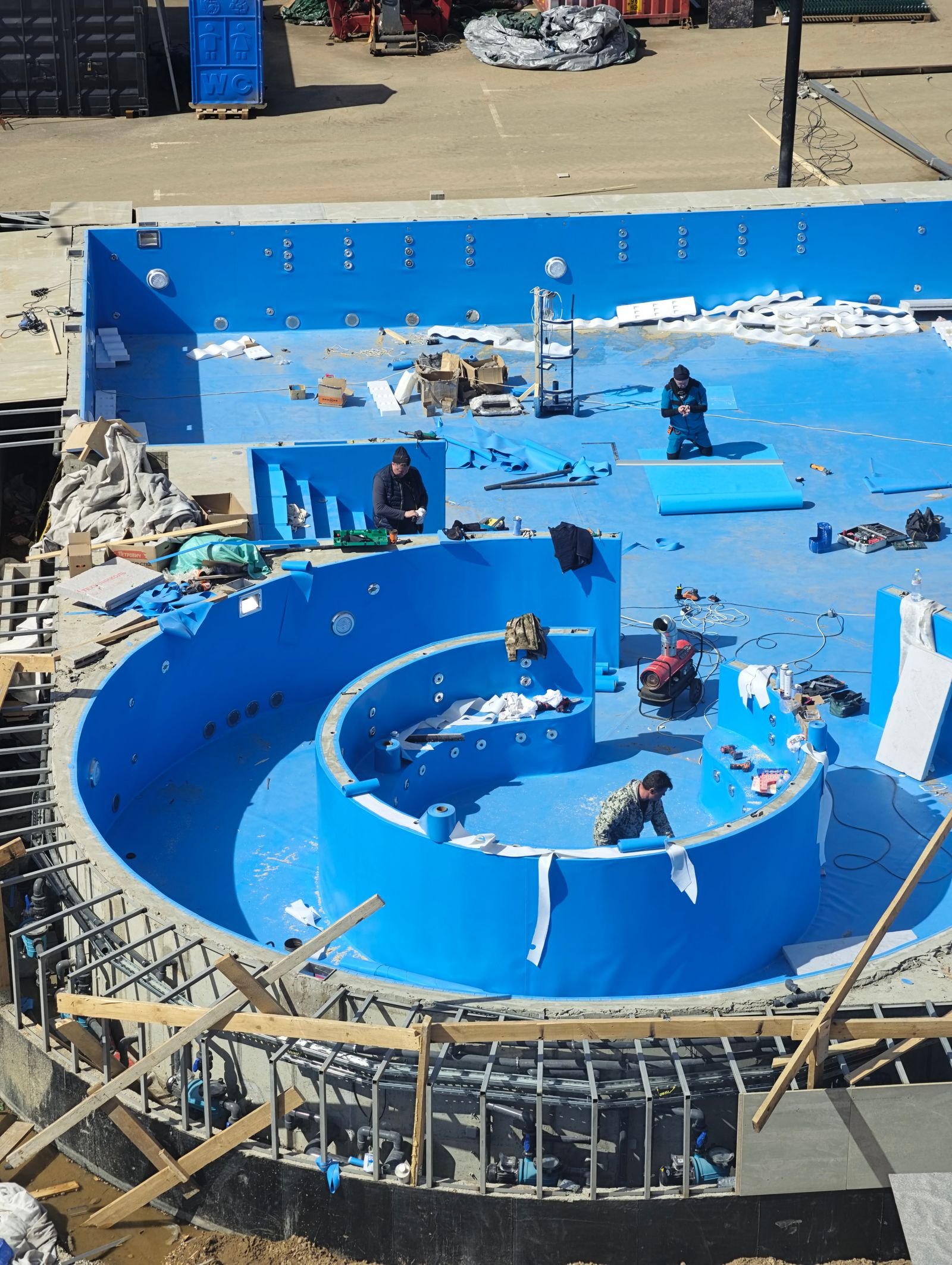
- Vinyl liner: wall panels are assembled, the floor is shaped and finished, plumbing is run, and the liner is set near the end. Measured in days to a couple of weeks.
- Gunite: steel rebar is tied, plumbing is roughed in, and concrete is sprayed — then the shell must cure before interior finish. The curing window alone adds weeks that no builder can honestly compress.
5. Utilities and equipment
Electrical runs and bonding, gas line if you are heating, equipment pad set, and inspections. Weather and inspector schedules gate this phase more than labor does.
6. Decking, coping, and fencing
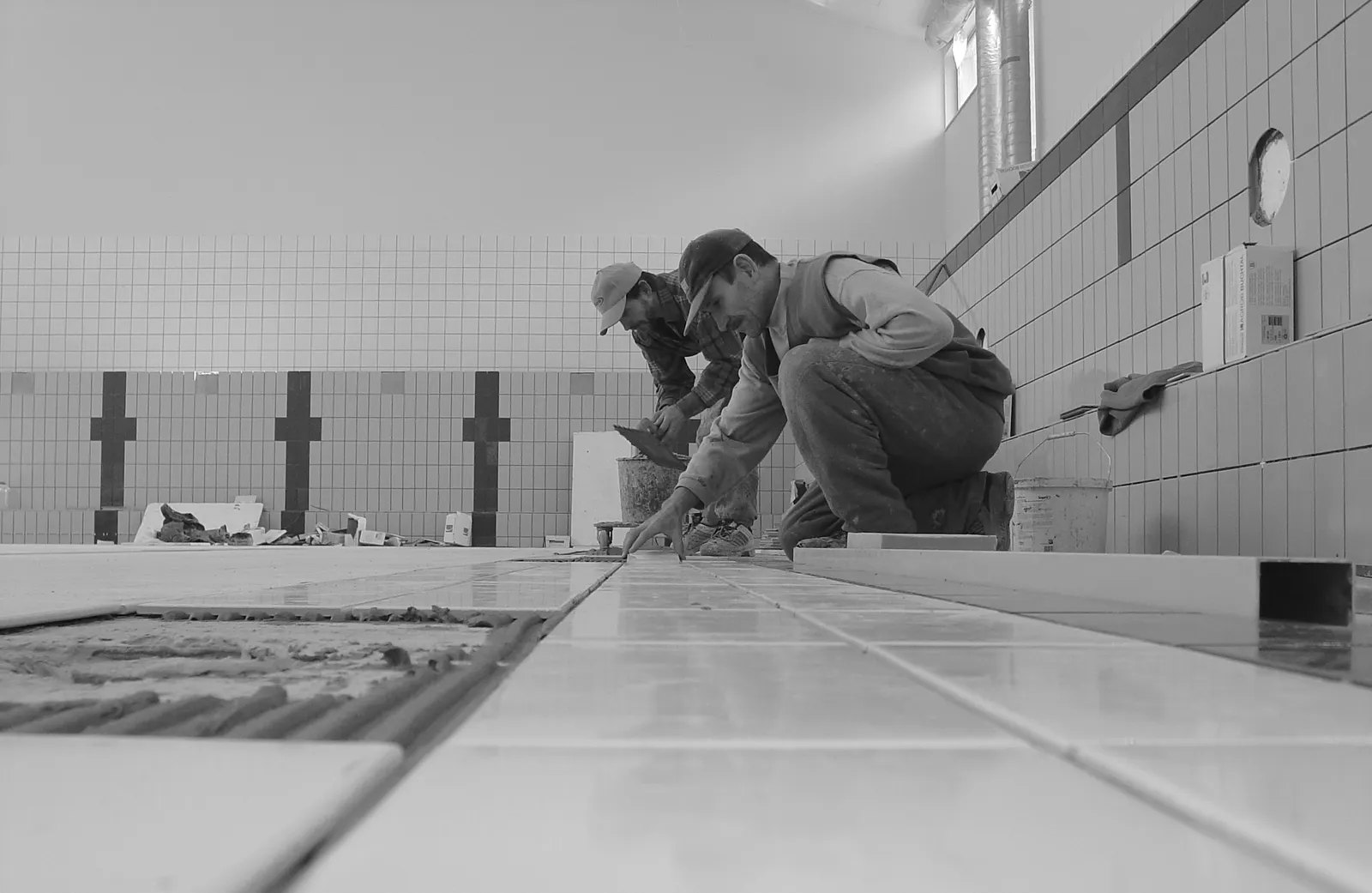
Concrete needs its own cure time before it is loaded; pavers and stone have material lead times. The barrier fence and gates must be in place for final inspection — schedule the fence like it is on the critical path, because it is.
7. Interior finish, fill, and start-up
Plaster or aggregate finish for gunite, liner set for vinyl, final shell checks for fiberglass — then water, balancing, equipment commissioning, and your orientation. New plaster finishes have a specific start-up and brushing routine in the first weeks; budget your attention, not just your money.
Where schedules actually slip
- Permits filed late or with a bad site plan. The most common and most preventable delay.
- Spring pile-ups. Everyone signs in March; builders' construction queues, inspectors, and concrete crews all saturate at once.
- Weather. Missouri spring rain turns excavation sites into ponds and pushes concrete work. A realistic schedule has weather slack in it.
- Change orders mid-build. Moving a pool, adding a spa, or upgrading decking mid-stream re-opens design, permits, and materials. Decide early; change rarely.
- Excavation surprises. Rock, water, and buried debris. Ask before signing how each is priced.
The planning rule that works
If you want to swim next summer, start conversations this fall or winter: design calmly, permit early, and take an early construction slot. Homeowners who do this routinely have the calmest builds — and the builders know it, which is why winter planning is the closest thing this industry has to a cheat code.
Start your clock now
Get matched with a local builder and get a real schedule for your yard, not a generic promise.
Keep reading
- Pool Permits in St. Louis County and St. Charles County — Who actually issues your pool permit, what the reviewer checks, the order to file in, and why the fence is part of the permit — not an afterthought.
- Fiberglass vs. Gunite vs. Vinyl Liner: An Honest Comparison — Cost, lifespan, maintenance, winter behavior, and resale — the real tradeoffs between the three ways to build an inground pool in St. Louis.
- What Pool Maintenance Really Costs Per Year — Electricity, chemicals, openings and closings, service plans, and the repair reserve nobody budgets for — a realistic annual picture.